

How to Use a Plasma Cutting Machine: A Complete Guide for Precision Metal Fabrication
In today’s fast-paced manufacturing industry, precision and efficiency are critical. Whether you're working on industrial fabrication, automotive parts, or custom metal projects, plasma cutting has become one of the most reliable methods for cutting conductive metals.
At Custom Engineering Inc., plasma cutting is part of a full-service fabrication workflow that includes CNC machining, welding, and forming—ensuring every project is completed with accuracy and consistency.
This guide will walk you through how to use a plasma cutting machine safely and effectively, especially for professionals and businesses in Canada looking for high-quality metal fabrication solutions.
What is a Plasma Cutting Machine?
A plasma cutting machine uses electrically conductive gas (plasma) to cut through metals like:
- Steel.
- Stainless steel.
- Aluminum.
- Copper.
It works by generating a high-temperature plasma arc that melts the metal and blows it away, creating a clean and precise cut.
This method is widely used in Canadian manufacturing industries due to its speed and ability to handle thick materials with smooth results.
Where Plasma Cutting is Used
Plasma cutting plays a major role in:
- Custom metal fabrication.
- Automotive and aerospace components.
- Construction and structural steel.
- Industrial equipment manufacturing.
Companies like Custom Engineering integrate plasma cutting with CNC machining and welding to deliver end-to-end fabrication solutions—from prototype to production.
Step-by-Step: How to Use a Plasma Cutting Machine
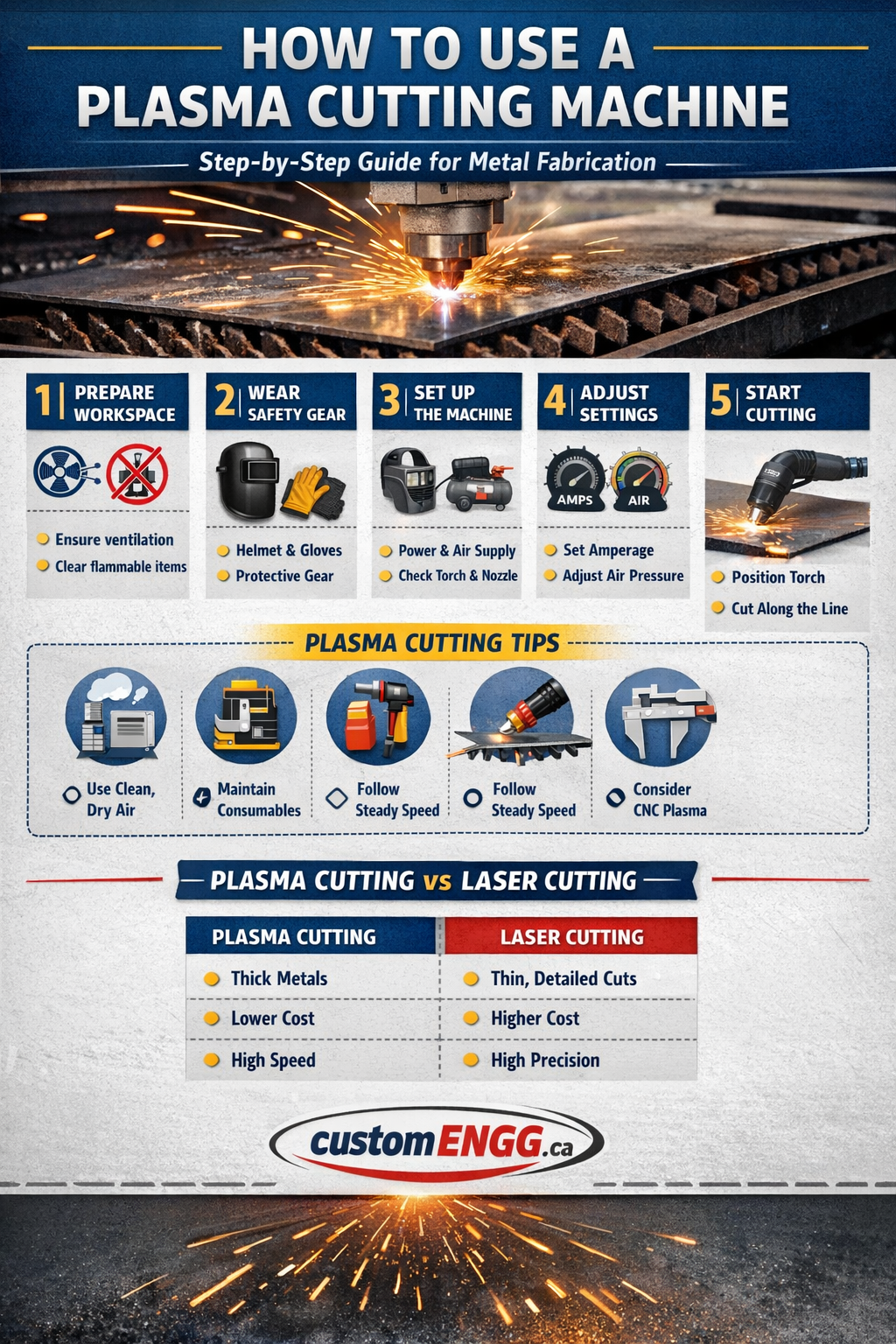
1. Prepare Your Workspace
Before starting:
- Ensure proper ventilation (plasma cutting produces fumes).
- Remove flammable materials.
- Set up a grounded metal worktable.
Safety is critical in any fabrication shop environment.
2. Wear Proper Safety Gear
Always use:
- Welding helmet or plasma cutting goggles.
- Flame-resistant gloves and clothing.
- Safety boots.
Professional fabrication facilities follow strict safety protocols to maintain quality and operator safety.
3. Set Up the Machine
- Connect the plasma cutter to a power source.
- Attach compressed air supply.
- Check torch and consumables (nozzle, electrode).
Modern fabrication shops use advanced equipment to ensure consistent and accurate performance.
4. Adjust Cutting Settings
Depending on material:
- Set correct amperage.
- Adjust air pressure.
- Choose cutting speed.
For example:
- Thin sheet metal → lower amperage.
- Thick steel → higher amperage.
Precision settings are what separate professional results from rough cuts.
5. Position the Torch
- Keep the torch perpendicular to the surface.
- Maintain proper distance (usually 1/8" to 1/4").
- Start at the edge of the material when possible.
6. Start Cutting
- Trigger the torch to create plasma arc.
- Move steadily along the cutting line.
- Avoid stopping mid-cut to prevent rough edges.
High-speed plasma cutting is especially useful for thick and tough materials while maintaining smooth finishes.
7. Inspect the Cut
After cutting:
- Check for smooth edges.
- Remove slag if needed.
- Ensure dimensional accuracy.
Professional fabrication companies often combine plasma cutting with CNC processes for tight tolerances and repeatability.
Tips for Better Plasma Cutting Results
- Use clean, dry air supply.
- Maintain consumables regularly.
- Follow consistent torch speed.
- Use CNC plasma cutting for complex designs.
Experienced technicians play a major role in achieving high-quality results, especially for custom engineering projects.
Plasma Cutting vs Laser Cutting
| Feature | Plasma Cutting | Laser Cutting |
|---|---|---|
| Best for | Thick metals | Thin, intricate designs |
| Speed | Very fast | Moderate |
| Cost | Lower | Higher |
| Precision | Good | Extremely high |
Most Canadian fabrication companies use both technologies depending on project requirements.
Why Choose Professional Plasma Cutting Services in Canada?
While DIY plasma cutting is possible, professional services offer:
- Higher precision.
- Faster turnaround.
- Advanced machinery.
- Integrated fabrication (cutting + welding + CNC).
At Custom Engineering Inc., plasma cutting is part of a complete fabrication ecosystem—ensuring your parts are cut, formed, machined, and finished under one roof.
Final Thoughts
Plasma cutting is one of the most efficient and versatile metal cutting methods available today. Whether you're a small workshop owner or a large-scale manufacturer in Canada, understanding how to use a plasma cutter can significantly improve your production quality and speed.
However, for projects requiring tight tolerances, repeatability, and professional finish, partnering with an experienced fabrication company can make all the difference.
Need Precision Plasma Cutting in Canada?
If you're looking for reliable plasma cutting, CNC machining, or custom metal fabrication, Custom Engineering Inc. offers tailored solutions backed by decades of experience, advanced equipment, and a customer-first approach.