

What is a CNC Mill Machine? The Ultimate Guide to CNC Milling in Canada
In today’s advanced manufacturing landscape, precision is everything. Whether it’s aerospace components, automotive parts, or custom-engineered solutions, businesses rely on machining technologies that deliver accuracy, repeatability, and efficiency.
One of the most powerful tools driving this transformation is the CNC milling machine.
At companies like Custom Engineering Inc., CNC milling is not just a standalone service—it’s integrated into a complete fabrication workflow that includes plasma cutting, welding, forming, and finishing. This ensures that every part meets strict quality standards from concept to completion.
This comprehensive guide will help you understand what a CNC mill machine is, how it works, its types, advantages, and why it plays a critical role in Canadian industries.
What is a CNC Mill Machine?
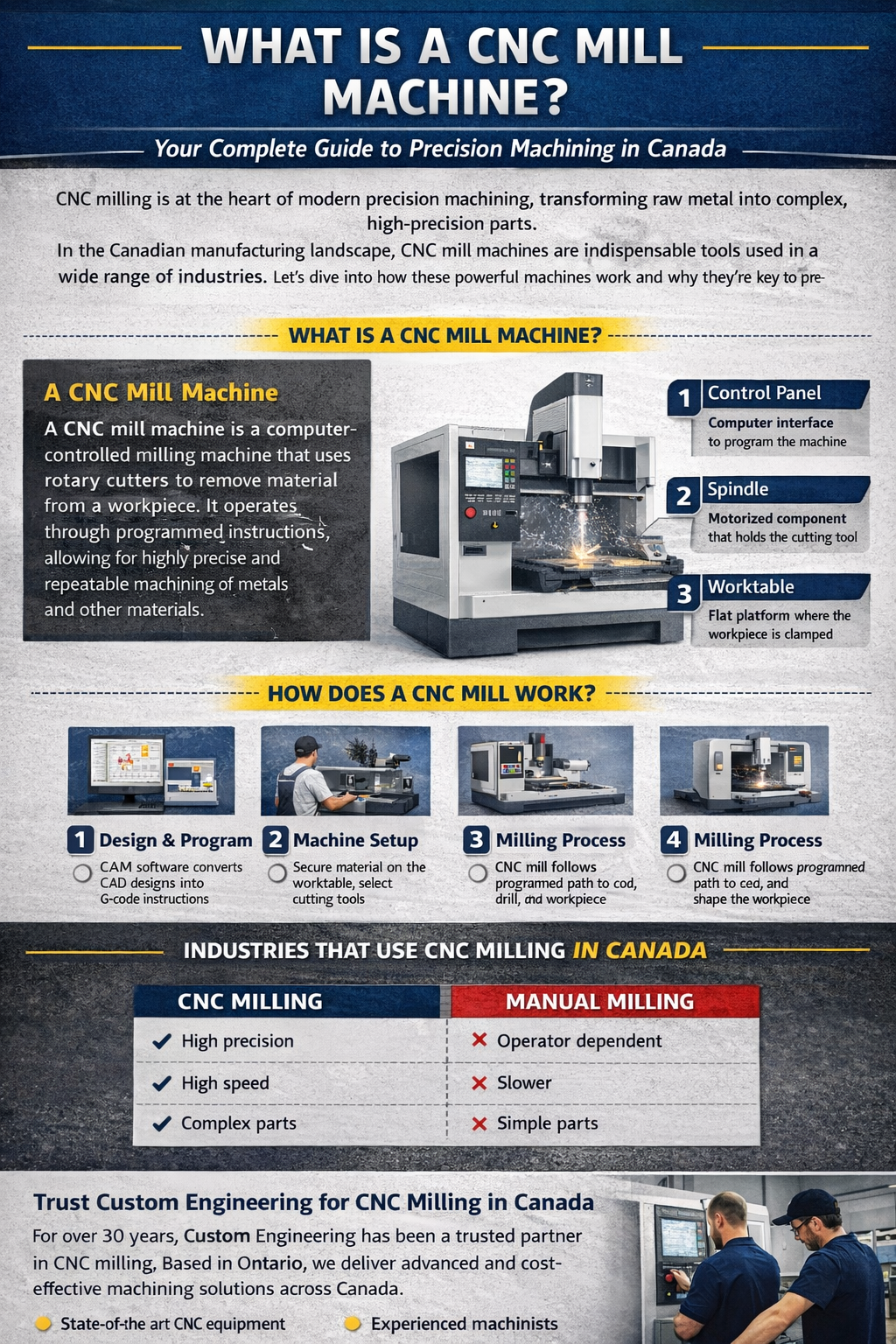
A CNC (Computer Numerical Control) milling machine is a precision machining tool that uses computer-controlled commands to remove material from a workpiece using rotating cutting tools.
Unlike manual machines, CNC mills operate through programmed instructions, allowing for:
- High precision.
- Complex geometries.
- Consistent production.
- Minimal human intervention.
In simple terms:
A CNC mill machine cuts and shapes solid material into finished parts with extreme accuracy using automation.
Core Components of a CNC Milling Machine
To truly understand CNC milling, it’s important to know the key components involved:
1. Machine Bed
The base structure that supports all other components and ensures stability.
2. Spindle
Holds and rotates the cutting tool at high speeds.
3. Worktable
Where the raw material is clamped securely.
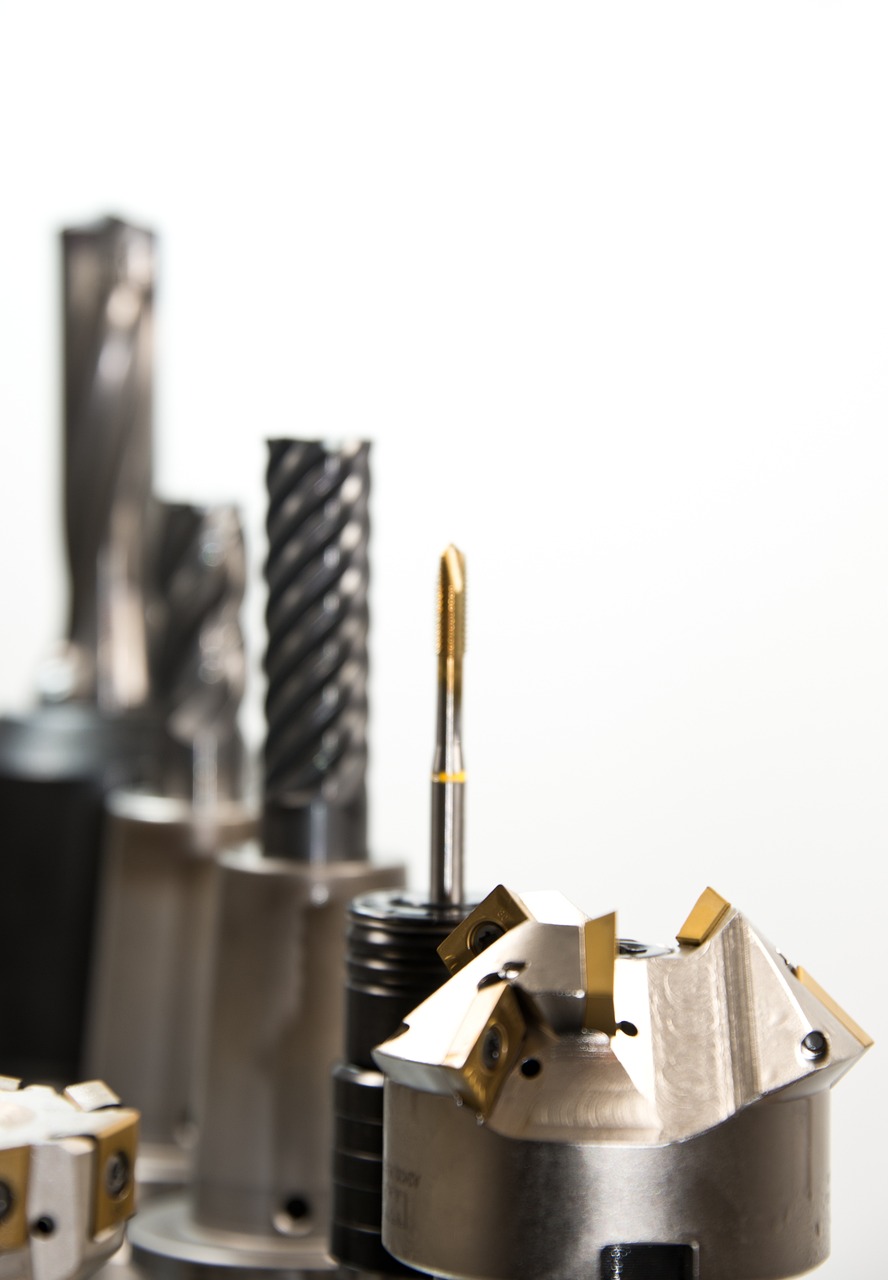
4. Cutting Tools
Different tools (end mills, face mills, drills) are used depending on the operation.
5. Control Panel (CNC Controller)
The “brain” of the machine that reads G-code and controls movements.
6. Axes System
- 3-axis: X, Y, Z.
- 4-axis & 5-axis: Additional rotational movement for complex parts.
Modern Canadian manufacturing facilities rely heavily on multi-axis machines for advanced applications.
How Does CNC Milling Work? (Step-by-Step Process)
1. CAD Design (Computer-Aided Design)
Everything starts with a digital blueprint. Engineers create 2D or 3D models using CAD software.
2. CAM Programming (Computer-Aided Manufacturing)
The CAD design is converted into G-code, which instructs the CNC machine on:
- Tool paths.
- Cutting speed.
- Depth of cut.
- Movements.
3. Machine Setup
- Material is fixed using clamps or vises.
- Tools are loaded into the spindle.
- Machine calibration is performed.
4. Material Removal Process
The machine begins cutting:
- The spindle rotates at high RPM.
- The tool moves along programmed paths.
- Material is removed layer by layer.
This process can achieve tolerances as tight as ±0.001 inches, depending on the setup.
5. Finishing Operations
After rough cutting:
- Surface finishing improves smoothness.
- Deburring removes sharp edges.
- Additional machining ensures precision.
6. Quality Inspection
Professional shops use tools like:
- CMM (Coordinate Measuring Machines).
- Digital calipers.
- Micrometers.
This ensures every component meets exact specifications.
Types of CNC Milling Machines
Vertical Milling Machine
- Spindle is vertical.
- Ideal for drilling and surface milling.
- Most common type.
Horizontal Milling Machine
- Spindle is horizontal.
- Better for heavy-duty cutting.
- Used in large-scale industrial applications.
3-Axis CNC Milling
- Movement in X, Y, Z directions.
- Suitable for basic parts.
4-Axis CNC Milling
- Adds rotational movement.
- Enables more complex geometries.
5-Axis CNC Milling
- Full multi-directional cutting.
- Perfect for aerospace and high-precision components.
- Reduces setup time significantly.
Common CNC Milling Operations
CNC milling is not just one process—it includes multiple operations:
- Face milling (flat surfaces).
- End milling (slots, pockets).
- Drilling (holes).
- Slotting.
- Contouring.
- Thread milling.
Each operation requires specific tools and programming.
Materials Used in CNC Milling
CNC milling machines are highly versatile and can work with:
Metals:
- Aluminum.
- Mild steel.
- Stainless steel.
- Brass.
- Titanium.
Non-metals:
- Plastics (ABS, Nylon).
- Composites.
- Wood (in specialized cases).
Canadian industries often prefer aluminum and stainless steel due to durability and corrosion resistance.
Applications of CNC Milling in Canada
CNC milling is widely used across industries such as:
🚗 Automotive
- Engine components.
- Gear parts.
- Custom modifications.
✈️ Aerospace
- High-precision parts.
- Lightweight structures.
🏗️ Construction
- Structural components.
- Custom metal parts.
⚙️ Industrial Manufacturing
- Machinery parts.
- Tools and dies.
🔧 Custom Fabrication
- One-off prototypes.
- Specialized engineering projects.
Companies like Custom Engineering Inc. serve multiple industries by offering integrated machining and fabrication solutions.
Advantages of CNC Milling Machines
✅ Exceptional Precision
Ideal for industries requiring tight tolerances.
✅ High Efficiency
Faster than manual machining.
✅ Repeatability
Identical parts can be produced consistently.
✅ Scalability
Perfect for both prototypes and mass production.
✅ Reduced Human Error
Automation minimizes mistakes.
✅ Complex Design Capability
Handles intricate geometries easily.
Limitations of CNC Milling
For a balanced view:
- High initial investment.
- Requires skilled programming.
- Maintenance costs.
- Not always cost-effective for very small jobs.
This is why many businesses prefer outsourcing to professional machining companies.
CNC Milling vs CNC Turning
| Feature | CNC Milling | CNC Turning |
|---|---|---|
| Tool Movement | Rotating tool | Rotating workpiece |
| Best For | Complex shapes | Cylindrical parts |
| Operations | Cutting, drilling, slotting | Turning, boring |
| Flexibility | High | Moderate |
Both processes are often used together in advanced manufacturing setups.
Why Canadian Businesses Choose Professional CNC Milling Services
Outsourcing CNC milling to experienced companies offers:
- Access to advanced multi-axis machines.
- Skilled engineers and machinists.
- Faster turnaround time.
- Strict quality control.
- Integrated services (cutting, welding, fabrication).
At Custom Engineering Inc., CNC milling is part of a full-service engineering approach—ensuring seamless execution from design to delivery.
Future of CNC Milling in Canada
With the rise of Industry 4.0, CNC milling is evolving rapidly:
- AI-driven machining.
- Smart factories.
- Automation and robotics.
- Real-time monitoring systems.
Canadian manufacturers are increasingly adopting these technologies to stay competitive globally.
Final Thoughts
CNC milling machines are at the heart of modern manufacturing. They combine precision, automation, and versatility to produce high-quality parts across industries.
Whether you're developing a prototype or scaling production, CNC milling provides the accuracy and efficiency needed to succeed in today’s competitive market.
Need CNC Milling Services in Canada?
If you're looking for precision machining, custom fabrication, or complete engineering solutions, Custom Engineering Inc. delivers reliable, high-quality results tailored to your project requirements.